


Organic traffic stands out as the most dependable source for sustained online visibility. By embracing a comprehensive organic marketing and SEO approach, it can evolve into a primary revenue stream. That's why integrating SEO throughout the organization is crucial, with keyword research forming a cornerstone.
Keyword research will play a central role in defining SEO objectives, content planning, and website optimization strategies. It's not an add-on but an essential step in building a strong online presence.
What is Keyword Research?
Keyword research is integral to optimizing your online content for search engines like Google. It involves identifying the phrases and terms that users search for and strategically incorporating them into your content to improve its visibility on search engine results pages (SERPs). By understanding the language that your audience uses, you can tailor your content to align with their interests and needs.
This process is fundamental to search engine optimization (SEO), as it helps drive organic traffic to your website. When conducting keyword research, selecting a topic relevant to your audience and identifying a set of targeted keywords is crucial.
These keywords should reflect the intent behind users' searches, ensuring that your content meets their expectations and ranks higher in search results. Through effective keyword research, you can enhance your content's discoverability and attract more qualified traffic to your website.
Types of keywords
There are several types of keywords used in SEO and digital marketing strategies:
1. Short-tail keywords:
Also known as "head" keywords, these are brief and general terms consisting of one to three words. They typically have high search volumes but are competitive.
Example: "shoes" or "digital marketing".
2. Long-tail keywords:
These are longer and more specific phrases, usually consisting of three or more words. Long-tail keywords have lower search volumes but are less competitive and often lead to higher conversion rates.
Example: "best running shoes for women" or "digital marketing strategies for small businesses".
3. Branded keywords:
These include the name of a specific brand or company. They are used by users who are already aware of the brand and are typically further along in the buying process.
Example: "Nike shoes" or "Apple iPhone"
4. Transactional keywords:
These indicate that the user is ready to make a purchase or take a specific action. They often include words like "buy", "order", "subscribe", or "download".
Example: "buy iPhone online" or "download free ebook"
5. Informational keywords:
These are used by users seeking information or answers to their questions. They often include words like "how to", "tips", "guide", or "tutorial".
Example: "how to tie a tie" or "digital marketing tips".
6. Navigational keywords:
These are used when users are looking for a specific website or webpage. They usually include the name of the brand or website.
Example: "Facebook login" or "Amazon homepage".
Why keyword is important?
In order to improve website visibility and relevancy, keyword research is essential to digital marketing as it helps reveal the terms and phrases consumers are searching for. It coordinates PPC advertising, SEO tactics, and content production, increasing organic traffic and conversion rates. In addition to helping with competitor analysis, market trends, and audience segmentation, effective keyword research improves audience engagement and returns on investment for companies. The benefits are as follows:
- SEO Powerhouse: The basic principle of SEO is keyword research (Search Engine Optimisation). Focusing on pertinent keywords may boost your website's rating and enhance organic traffic by making it prominent in search engine results.
- Aim for Audience Lock: Visualise reaching the precise individuals attracted to your offerings! You can better adapt your content and messaging to the requirements of your target audience and intent by conducting keyword research to see what searches they make.
- Content with a Goal: Don't create content only for leisure anymore! Your content strategy is determined by keyword research, which ensures that the content you generate is insightful and helpful, connects with readers, and establishes you as a thought leader in the industry.
- Advertising Effectiveness: The key to effective and inexpensive advertising is keyword research. Your return on investment gets maximized when you include pertinent keywords in your advertisements and target customers who are actively looking for your products or services.
How to do keyword research?
Keyword research is a vital component of SEO, encompassing various methods and tools to uncover the most relevant and impactful keywords for content optimization. Here's how to conduct keyword research effectively, utilizing both tools and manual techniques:
Using Tools:
How to do Keyword Research in SemRush Tool:
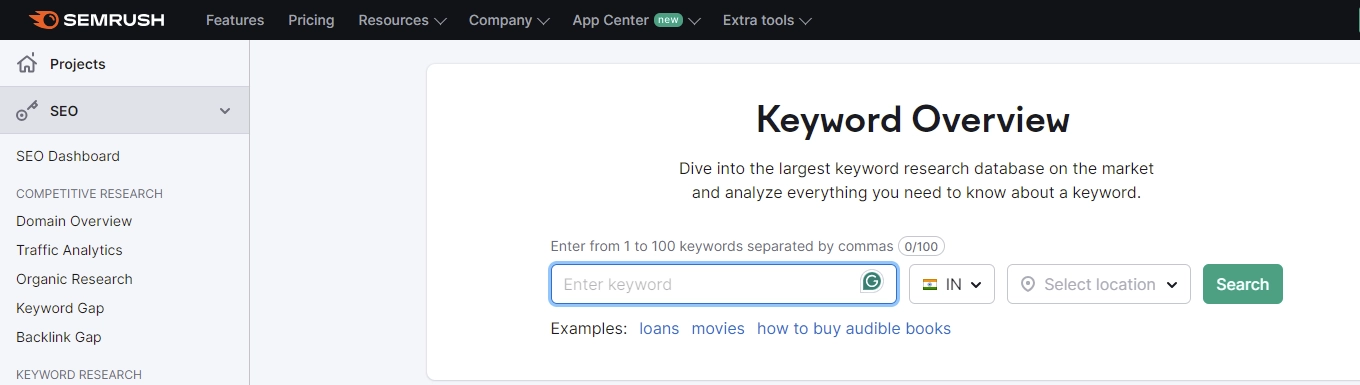
Step 1: Brainstorm Keywords or Identifying the Seed Keyword:
Think about what people would search for related to your business or website. What are the main topics or products you offer? For Example, if you are into the footwear business the seed keywords for you would be men shoes, women shoes, office shoes, and school shoes.
Step 2: Use Semrush Keyword Magic Tool:
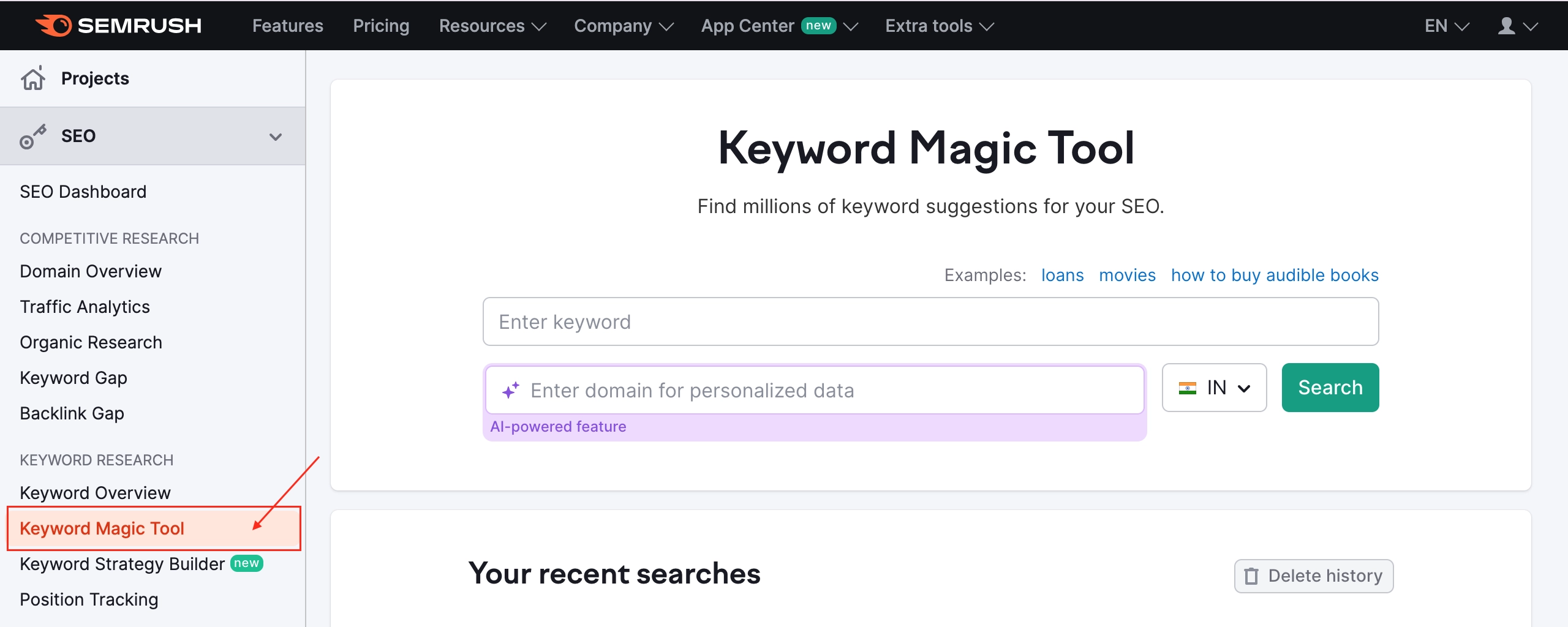
Head over to Semrush's Keyword Magic Tool. Type in your main keyword and choose your target location. This tool will give you a bunch of related keywords with how many searches they get each month (search volume) and how hard it is to rank for them (The lower the keyword difficulty, the better the chances of ranking higher in Google results).
Step 3: Refine Your List with Filters:
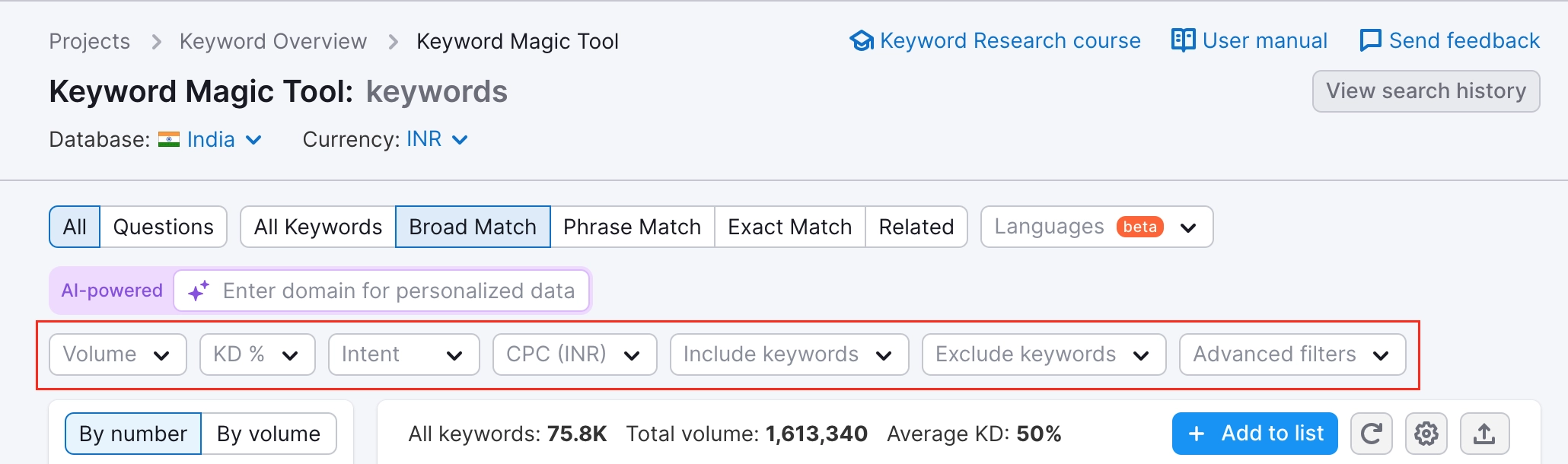
Don't just go for the most popular keywords! Choose ones with a decent search volume but a difficulty level that seems achievable for your website. You can use filters to narrow down your options based on search volume and difficulty as shown in the above image.
Step 4: Analyze Competitor Keywords:
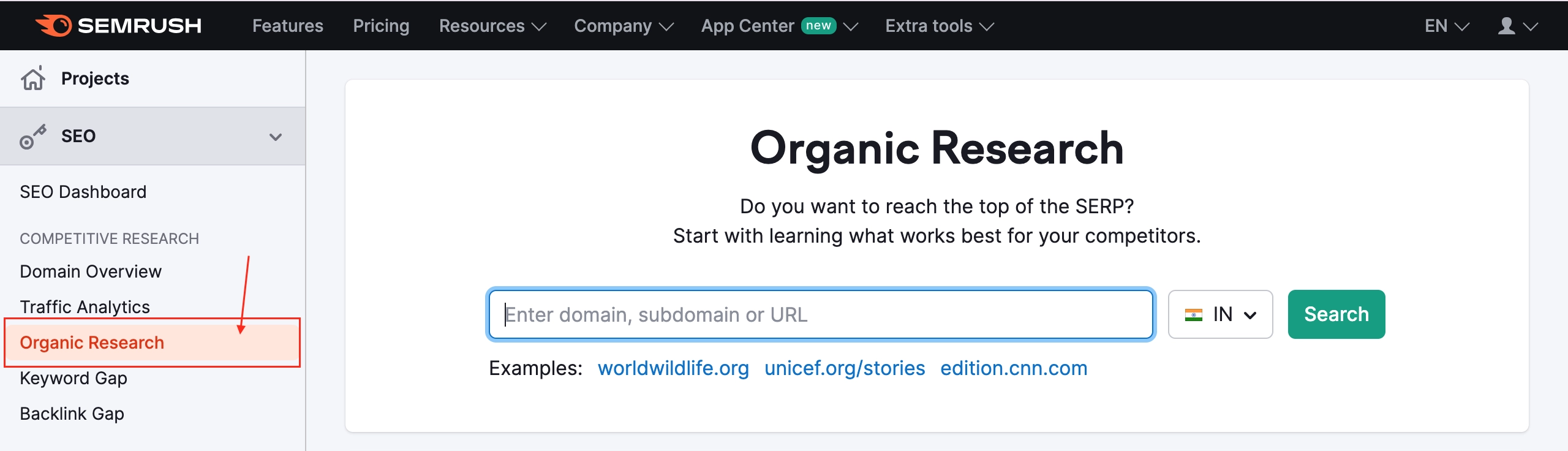
You can spy on your competitors using Semrush's Organic Research tool. This can show you what keywords they rank for, giving you some extra ideas.
Step 5: Organize Your Keywords:
Once you've picked out your best keywords, use the Keyword Manager tool or Excel/Google Sheets to save them and put them into lists based on the keyword intent like informational, navigational, transactional.
Step 6: Build Your Content Strategy:
Now that you have your keyword list, you can use those keywords to create content that people are actually searching for. This will help you attract more visitors to your website.
Keyword Research by Using Google Keyword Planner:
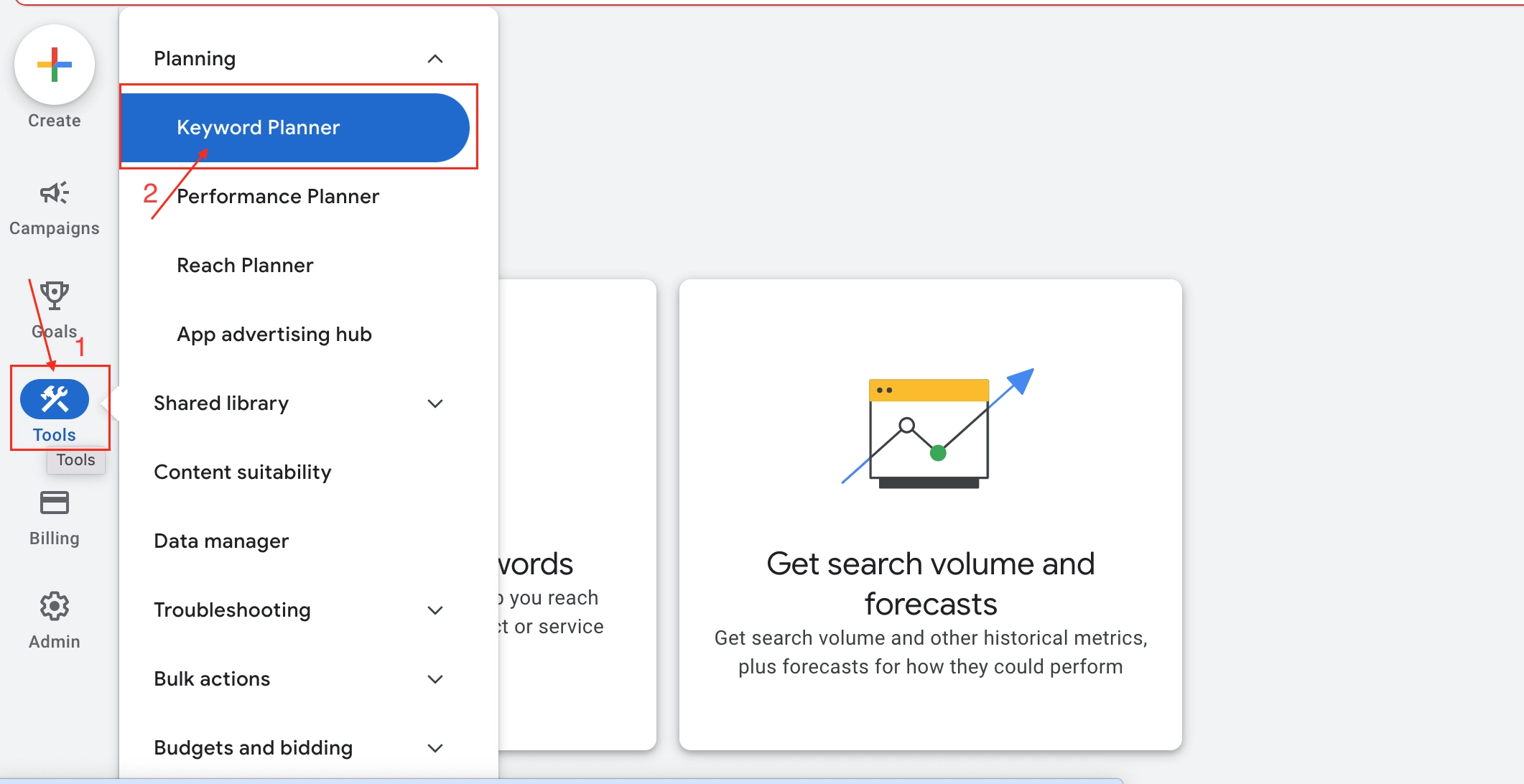
Step1: Access Google Keyword Planner:
You'll need a Google Ads account to access Keyword Planner. If you don't have one, you can create a free account. After creating your account go to Tools>Planning>Keyword Planner to access the Google keyword planner tool.
Step2: Choose your Discovery Method

Keyword Planner offers two main ways to discover keywords:
- Discover new keywords: This option allows you to enter seed keywords related to your product or service. Google will then suggest related keywords and phrases as shown in the below image.
- Get search volume and forecasts: If you already have a list of keywords, you can enter them here to see the estimated search volume and forecasts.
Step3: Discover new keywords (using seed keywords)
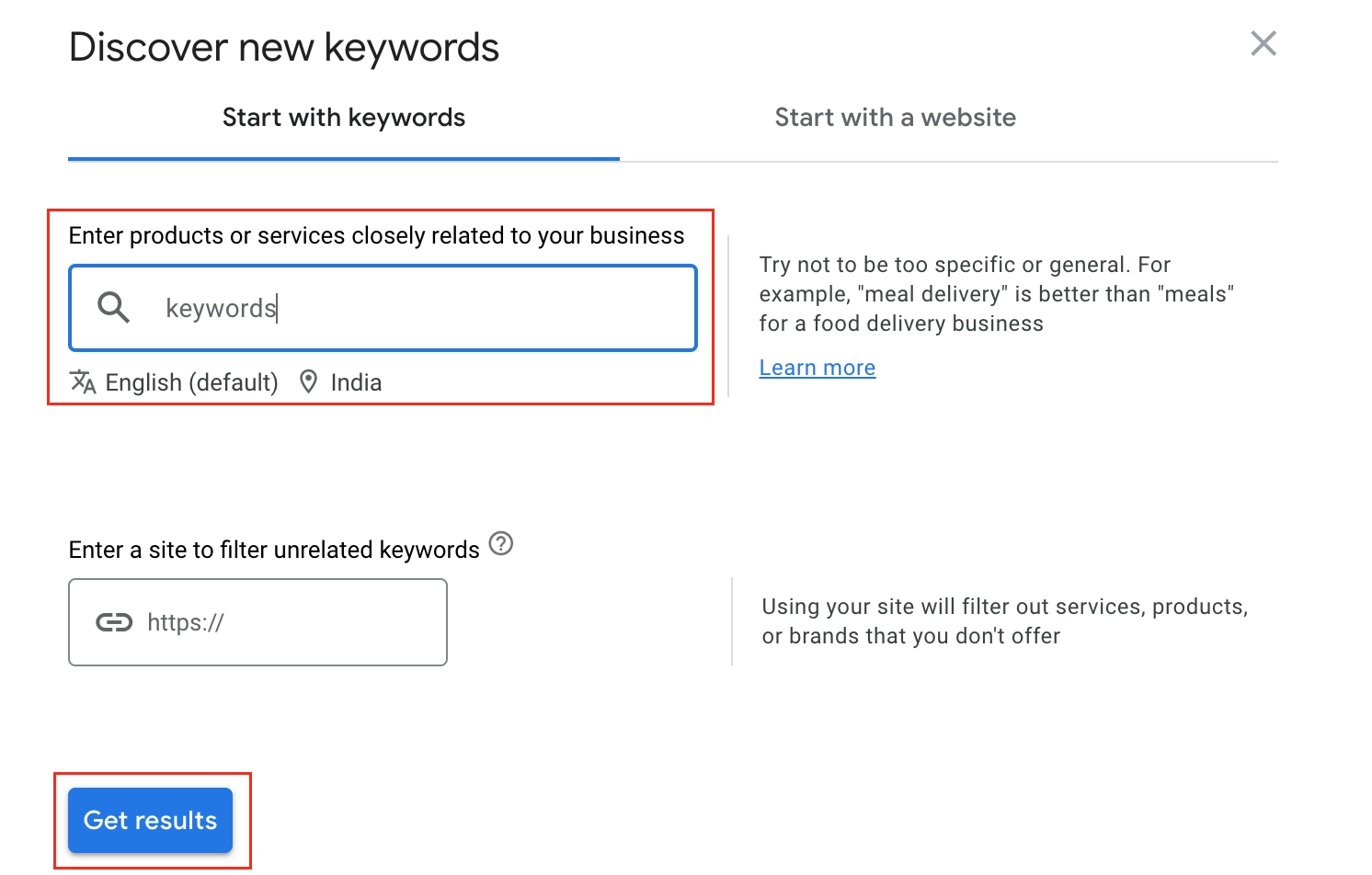
- Enter your seed keywords in the search bar. You can add up to 10 keywords at a time.
- You can also target your search by location, language, and date(it is recommended to take the last 3 months' data).
- Click "Get results" to see a list of keyword ideas.
Step4: Analyze the keyword ideas:
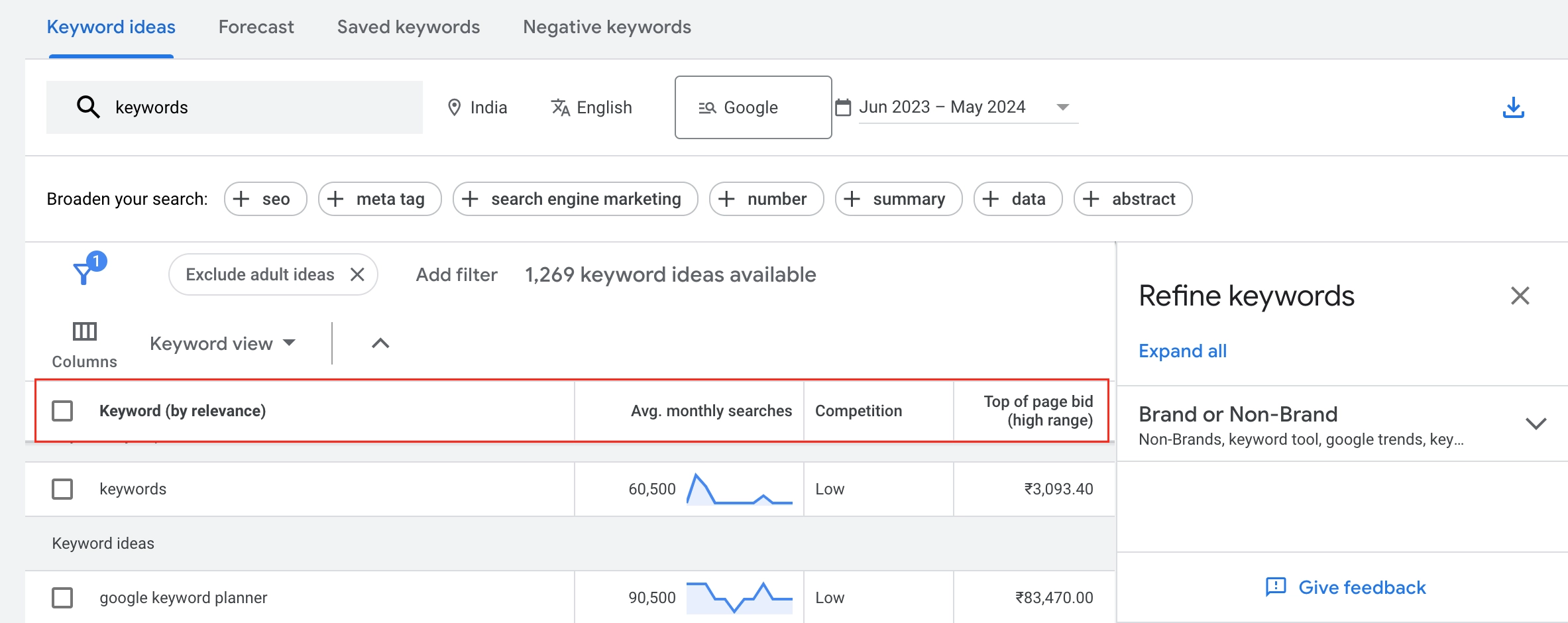
Keyword Planner will provide you with several metrics for each keyword suggestion, including:
- Average monthly searches: This shows how often a particular keyword is searched for on average each month.
- Competition: This indicates how difficult it might be to rank for a particular keyword.
- Top of page bid (low range): This gives you an estimate of the cost per click (CPC) for running ads on that keyword. (Not necessarily relevant for SEO purposes).
Step5: Refine your results and choose your keywords:
You can use filters to narrow down your keyword list based on various criteria like search volume, competition, and relevance.
Consider factors like search intent (what users are looking for when they search for a keyword) and keyword difficulty when choosing your final keywords.
Note: While Keyword Planner provides estimated search volumes, these numbers aren't always exact. Consider using other SEO tools alongside Keyword Planner for a more comprehensive understanding of keyword search volume.
How to do keyword research in Ahrefs:
1. Brainstorm Seed Keywords:
Start by listing down broad keywords relevant to your niche or website's content. These are your seed keywords.
2. Utilize Ahrefs Keyword Explorer:
Navigate to the Keyword Explorer tool within Ahrefs and add your seed keyword(s) into the search bar.
3. Analyze Keyword Metrics:
Ahrefs will generate a list of related keywords along with various metrics:
- Search Volume: Estimated monthly searches for the keyword.
- Keyword Difficulty (KD): Score indicating how challenging it is to rank for the keyword (0-100, with 100 being the hardest).
- Traffic Potential: Estimated amount of traffic a page ranking for the keyword could receive.
4. Refine Your Results with Filters:
Use filter options to narrow down your keyword list based on your preferences. Here are some key filters:
- Keyword Difficulty: Find keywords that are sweet spots - not too easy, not too hard to rank for (like fish that are just the right size).
- Search Volume: Only look at keywords with enough searches per month (like fish schools with a good number of fish).
- Other filters: You can even target questions people ask or keywords related to buying things.
5. Explore Related Keyword Reports:
- Ahrefs offers various reports within the Keyword Explorer to broaden your research:
- Matching Terms: Provides keywords containing your seed keyword.
- Also Rank For: Shows keywords websites ranking for your seed keyword also rank for.
- Search Questions: Discover questions people are searching for related to your topic.
Manual Method:
1. Google Auto Suggestion:
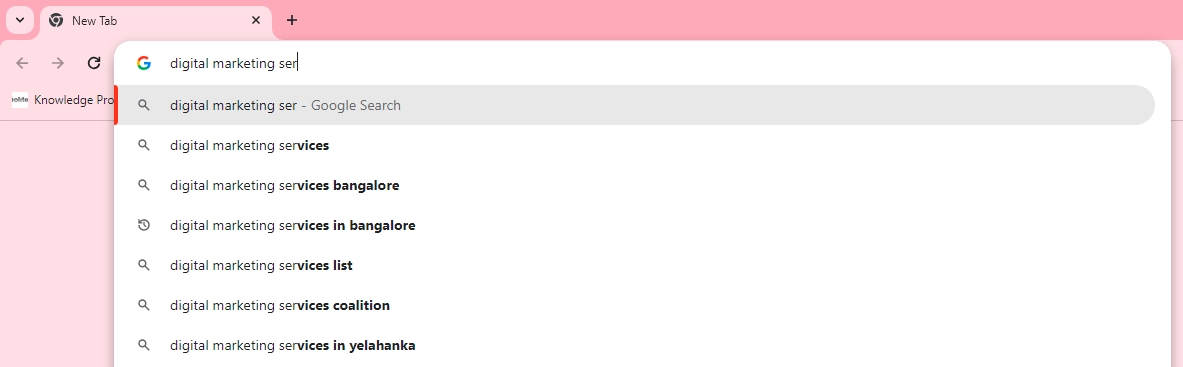
Google's auto-suggestion feature offers real-time keyword suggestions as users type queries into the search bar. By leveraging this feature, marketers can identify popular search terms and trending topics within their niche, providing valuable insights for content creation and optimization.
2. Related Keyword Section in Result Page:
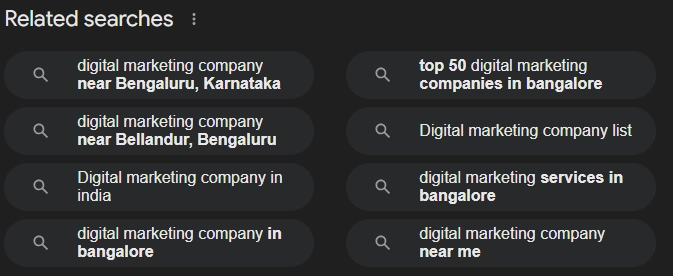
At the bottom of Google search results pages, the "Related Searches" section displays additional keyword suggestions related to the initial query. Marketers can explore these related keywords to discover variations and expand their keyword lists, enhancing the relevance and visibility of their content.
Important factors you need to consider while doing keyword research
When conducting keyword research, several important factors should be considered to ensure the selection of optimal keywords for content optimization.
1. Relevance:
The relevance of a keyword refers to how closely it aligns with the content and offerings of your website or business. It's essential to target keywords that accurately reflect the products, services, or topics you're addressing to attract relevant traffic and meet user expectations.
2. Intent:
Understanding user intent behind specific keywords is crucial for delivering content that satisfies searchers' needs. Keywords can be categorized into informational, navigational, or transactional based on user intent. Tailoring content to match the intent behind target keywords enhances user satisfaction and improves conversion rates.
3. Search Volume:
Search volume indicates the number of times a keyword is searched for within a specific timeframe. While high search volume suggests significant user interest, it also means higher competition. Conversely, low search volume may indicate limited demand but less competition. Balancing search volume with relevance is key to selecting keywords that offer sufficient traffic potential.
4. Difficulty:
Keyword difficulty assesses the competitiveness of ranking for a specific keyword in search engine results. Factors such as domain authority, backlink profile, and content quality influence keyword difficulty. Choosing keywords with a manageable level of difficulty relative to your website's authority and resources increases the likelihood of ranking well in search results.
How to choose the right keyword?
Choosing the right keyword involves a strategic process that considers various factors to ensure alignment with your goals and audience.
- Define Your Goals: Understand the objectives of your content or your business. Are you aiming to increase website traffic, attract leads, or promote specific products/services? Clarifying your goals will guide keyword selection.
- Know Your Audience: Identify your target audience and their preferences, interests, and search behaviors. Consider their demographics, pain points, and the language they use when searching for information related to your niche.
- Conduct Keyword Research: Use keyword research tools like Google Keyword Planner, Semrush, or Ahrefs to discover relevant keywords. Focus on factors such as search volume, relevance, competition, and user intent.
- Prioritize Relevance: Choose keywords that are highly relevant to your offerings, and target audience. Ensure that selected keywords accurately reflect the topics or themes addressed in your content.
- Consider Search Intent: Understand the intent behind each keyword. Are users seeking information, looking to make a purchase, or seeking specific solutions? Align your content with the intended purpose of the keyword to satisfy user needs.
- Assess Search Volume and Competition: Strike a balance between search volume and keyword competition. Opt for keywords with sufficient search volume to attract traffic but with manageable competition, especially if your website has lower authority.
- Evaluate Long-Tail Keywords: Long-tail keywords, which are more specific and usually longer phrases, often have lower search volume but higher relevance and intent. Consider incorporating long-tail keywords to target niche audiences and capture high-converting traffic.
- Analyze Keyword Difficulty: Assess the difficulty of ranking for your chosen keywords based on factors like domain authority, backlink profile, and content quality. Aim for keywords with a reasonable level of difficulty that aligns with your website's capabilities.
- Monitor and Adjust: Continuously monitor keyword performance and adapt your strategy based on evolving trends, changes in search algorithms, and competitor activities. Regularly review and update your keyword targeting to maintain relevance and effectiveness.
By following these steps and taking a comprehensive approach to keyword selection, you can choose the right keywords that align with your objectives, resonate with your audience, and drive meaningful results for your SEO efforts.