


Marketing has been around since trade began, focusing on reaching your audience when and where it matters. Now, with the Internet, this connection is easier than ever. Digital marketing allows businesses to effortlessly engage with their audience online, ensuring their message reaches the right people at the right time.
What Is Digital Marketing?

Digital marketing refers to the use of digital channels, platforms, and technologies to promote products, services, or brands to reach and engage with a target audience. It includes various online marketing tactics aimed at connecting businesses with their customers through digital channels such as websites, search engines, social media, email, mobile apps, and other digital platforms.
What is the importance of digital marketing?
Digital marketing is crucial for businesses due to its ability to reach a global audience, target specific groups, and deliver measurable results. It offers cost-effective solutions, enhances customer engagement, and adapts swiftly to market changes, driving sales, revenue growth, and sustained competitiveness in the digital era.
Reasons Why Digital Marketing Is Important
Digital marketing has become crucial for businesses of all sizes due to several reasons:
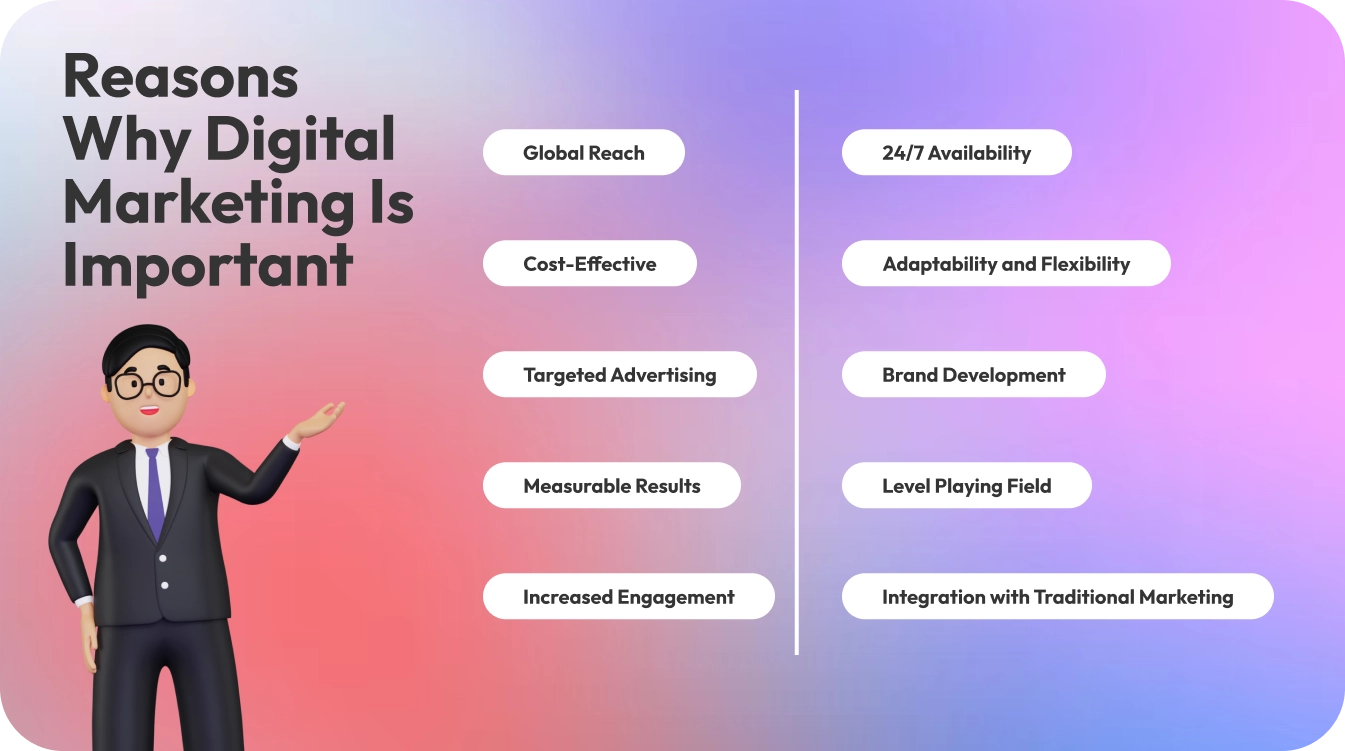
1. Global Reach:
Digital marketing allows businesses to reach a global audience with ease. Through various online channels such as social media, search engines, and email marketing, businesses can target audiences worldwide, breaking geographical barriers.
2. Cost-Effective:
Compared to traditional marketing methods like print ads or TV commercials, digital marketing is often more cost-effective. With tools like social media advertising and pay-per-click (PPC) campaigns, businesses can reach their target audience at a fraction of the cost of traditional advertising.
3. Targeted Advertising:
Digital marketing enables precise targeting of specific demographics, interests, behaviors, and locations. This targeted approach ensures that marketing efforts are focused on reaching the right audience, leading to higher conversion rates and ROI.
4. Measurable Results:
Unlike traditional marketing, digital marketing offers detailed analytics and insights into campaign performance in real-time. Businesses can track metrics such as website traffic, conversion rates, engagement levels, and more, allowing them to make data-driven decisions and optimize their strategies for better results.
5. Increased Engagement:
Digital marketing channels provide numerous opportunities for engagement with the audience. Whether through social media interactions, email newsletters, or personalized content, businesses can foster relationships with their customers, leading to brand loyalty and repeat business.
6. 24/7 Availability:
With digital marketing, businesses can remain accessible to their audience round the clock. Websites, social media profiles, and online ads are available 24/7, allowing customers to engage with the brand at their convenience, leading to increased brand visibility and customer satisfaction.
7. Adaptability and Flexibility:
Digital marketing strategies can be easily adapted and modified based on real-time feedback and market trends. This flexibility allows businesses to respond quickly to changes in consumer behavior, industry dynamics, or competitive landscapes, ensuring they stay ahead of the curve.
8. Brand Development:
Digital marketing plays a crucial role in brand building and reputation management. By creating compelling content, engaging with customers on social media, and maintaining a strong online presence, businesses can enhance their brand image and credibility in the digital sphere.
9. Level Playing Field:
Digital marketing provides small and medium-sized businesses with a level playing field to compete with larger corporations. With the right strategy and execution, smaller businesses can effectively reach their target audience and compete with industry giants without massive marketing budgets.
9. Integration with Traditional Marketing:
Digital marketing complements traditional marketing channels by providing additional touchpoints and opportunities for interaction with the audience. By integrating digital strategies with traditional marketing efforts, businesses can create cohesive and impactful marketing campaigns that resonate with their target market.
How do Businesses use Digital Marketing?
Businesses use digital marketing in various ways to achieve their goals and connect with their target audience. Here are some common strategies:
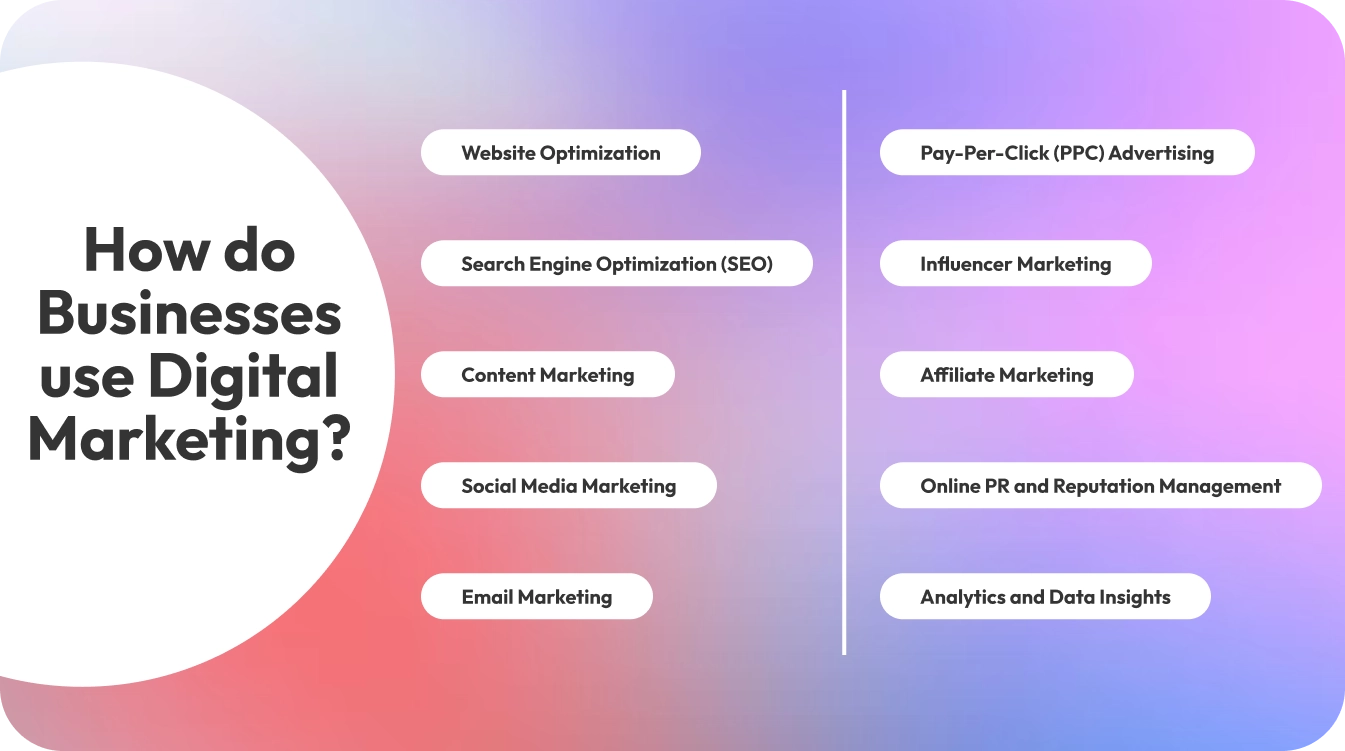
1. Website Optimization:
Businesses ensure their websites are user-friendly, mobile-responsive, and optimized for search engines to improve visibility and attract organic traffic.
2. Search Engine Optimization (SEO):
By optimizing website content, keywords, and metadata, businesses aim to improve their search engine rankings and increase organic traffic.
3. Content Marketing:
Through blog posts, articles, videos, infographics, and other forms of content, businesses provide valuable information to their audience, establish thought leadership, and drive engagement.
4. Social Media Marketing:
Businesses leverage social media platforms like Facebook, Instagram, Twitter, and LinkedIn to connect with their audience, share content, run ads, and build brand awareness.
5. Email Marketing:
Businesses use email campaigns to nurture leads, communicate with customers, promote products or services, and drive conversions through personalized messaging.
6. Pay-Per-Click (PPC) Advertising:
By bidding on keywords and targeting specific demographics, businesses run targeted ads on search engines like Google and social media platforms like Facebook to drive traffic and conversions.
7. Influencer Marketing:
Businesses collaborate with influencers and industry experts to reach their target audience, build credibility, and promote products or services through sponsored content.
8. Affiliate Marketing:
Businesses partner with affiliates or publishers who promote their products or services in exchange for a commission on sales generated through their referral links.
9. Online PR and Reputation Management:
Businesses monitor online mentions, reviews, and feedback to manage their online reputation and address any issues or concerns raised by customers.
10. Analytics and Data Insights:
Businesses use tools like Google Analytics, social media insights, and CRM systems to track and analyze customer behavior, campaign performance, and ROI, allowing them to make data-driven decisions and optimize their strategies.
Why is Digital Marketing Important for Small Business?
Digital marketing is crucial for small businesses as it offers a cost-effective way to reach a targeted audience, compete with larger competitors, and expand their reach globally.
Small businesses can optimize their marketing efforts for better ROI through targeted advertising, measurable results, and increased engagement. Digital channels provide flexibility, adaptability, and valuable insights, allowing small businesses to make data-driven decisions and build brand awareness.
Overall, digital marketing levels the playing field, empowers small businesses to connect with customers and drives growth in today's competitive marketplace.
How to Choose a Digital Marketing Agency
Choosing the right digital marketing agency requires careful consideration.
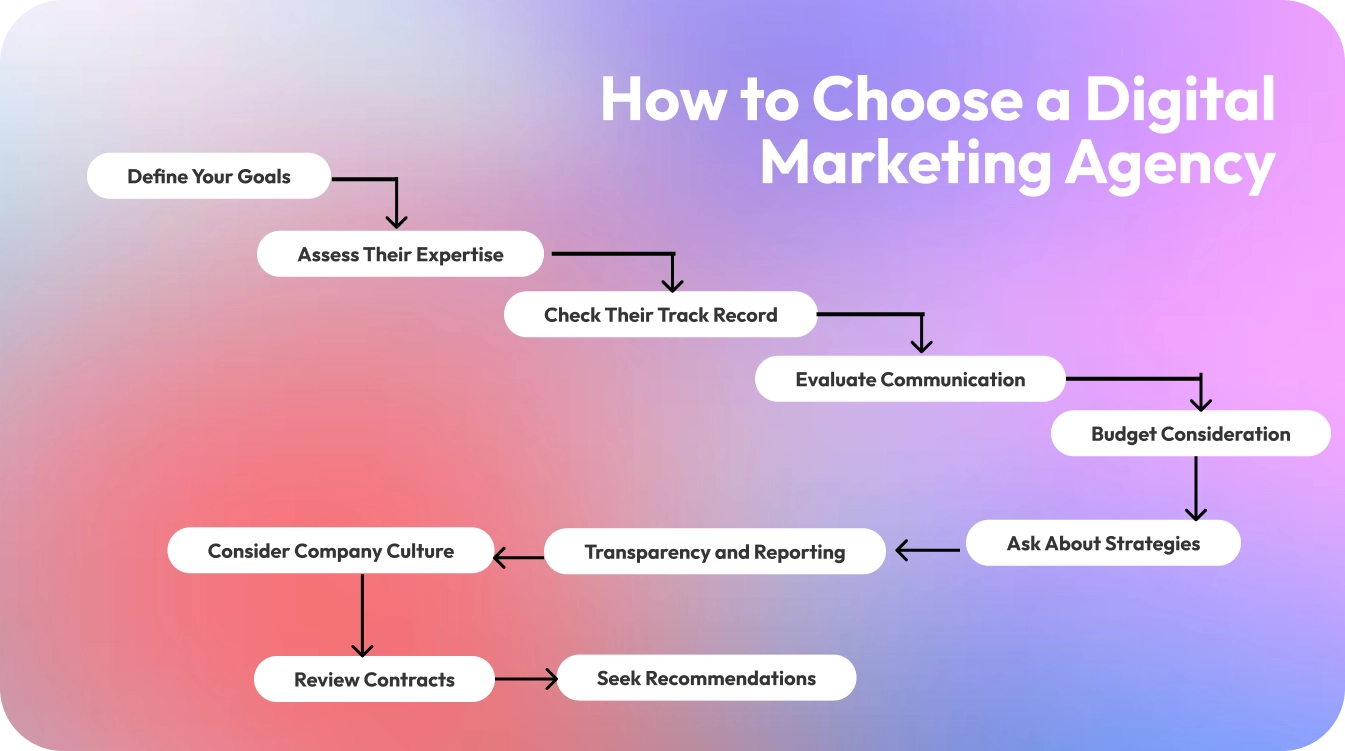
1. Define Your Goals:
Determine your marketing objectives and what you want to achieve with the agency's help.
2. Assess Their Expertise:
Look for agencies with experience in your industry and expertise in the services you need (e.g., SEO, social media, PPC).
3. Check Their Track Record:
Review case studies, client testimonials, and past projects to gauge their success and credibility.
4. Evaluate Communication:
Ensure the agency communicates effectively and understands your brand's voice and goals.
5. Budget Consideration:
Determine your budget and find an agency that offers services within your financial constraints while delivering value.
6. Ask About Strategies:
Inquire about their strategies, approach, and how they plan to achieve your goals.
7. Transparency and Reporting:
Choose an agency that provides transparent reporting and regular updates on campaign performance.
8. Consider Company Culture:
Assess if their company culture aligns with yours, as a good fit fosters better collaboration and results.
9. Review Contracts:
Carefully review contracts, including services offered, timelines, and any additional fees.
10. Seek Recommendations:
Ask for recommendations from trusted sources or others who have worked with digital marketing agencies before.
Conclusion
Digital marketing is essential for business success, offering boundless opportunities for brand expansion and sales enhancement. By staying informed about emerging trends in the digital world, businesses can harness them to their advantage, ensuring longevity and resilience in an ever-evolving landscape.